Remembering who Labor Day is for, how America lost sight of skilled work, and why it’s coming back.
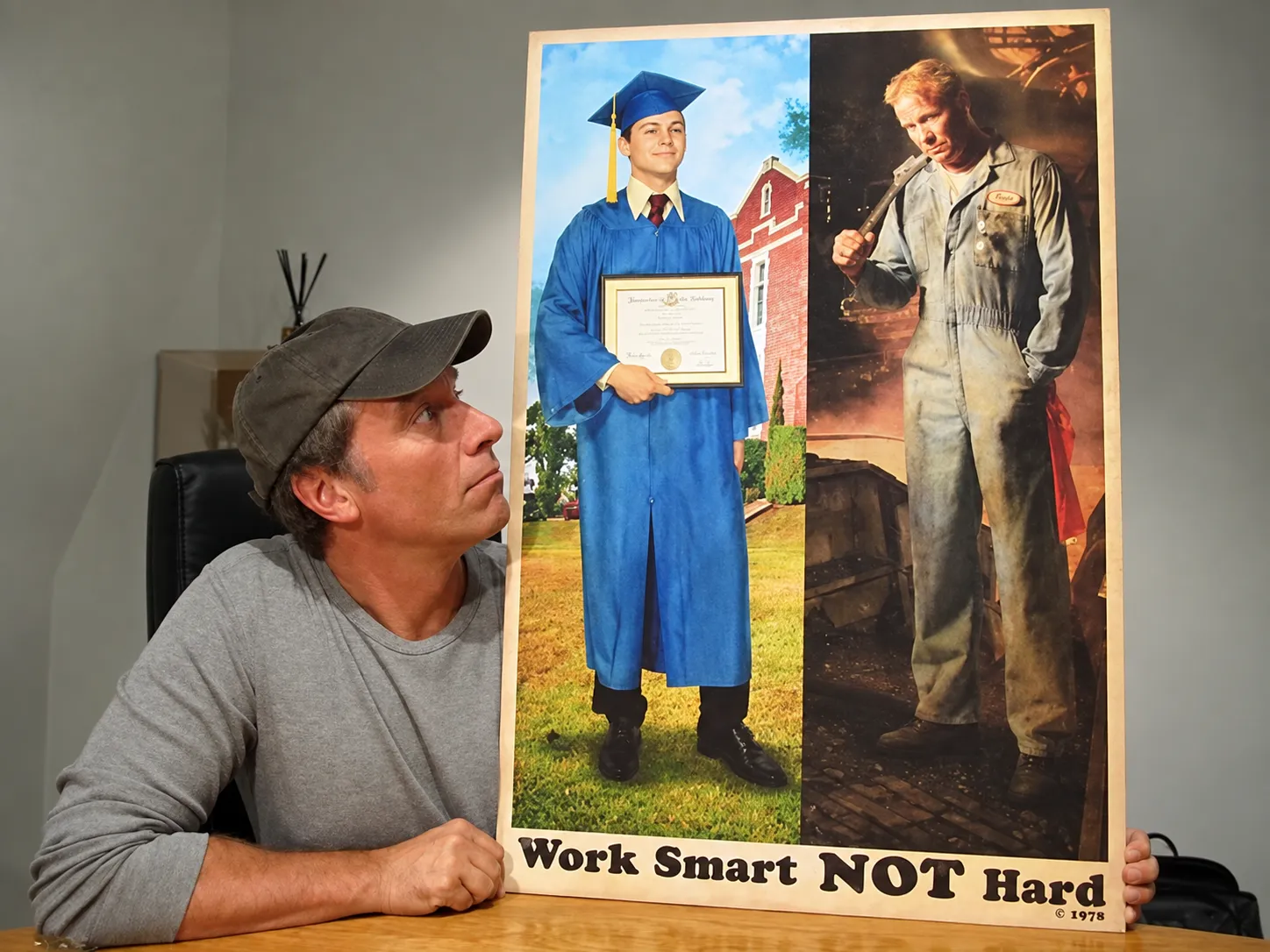
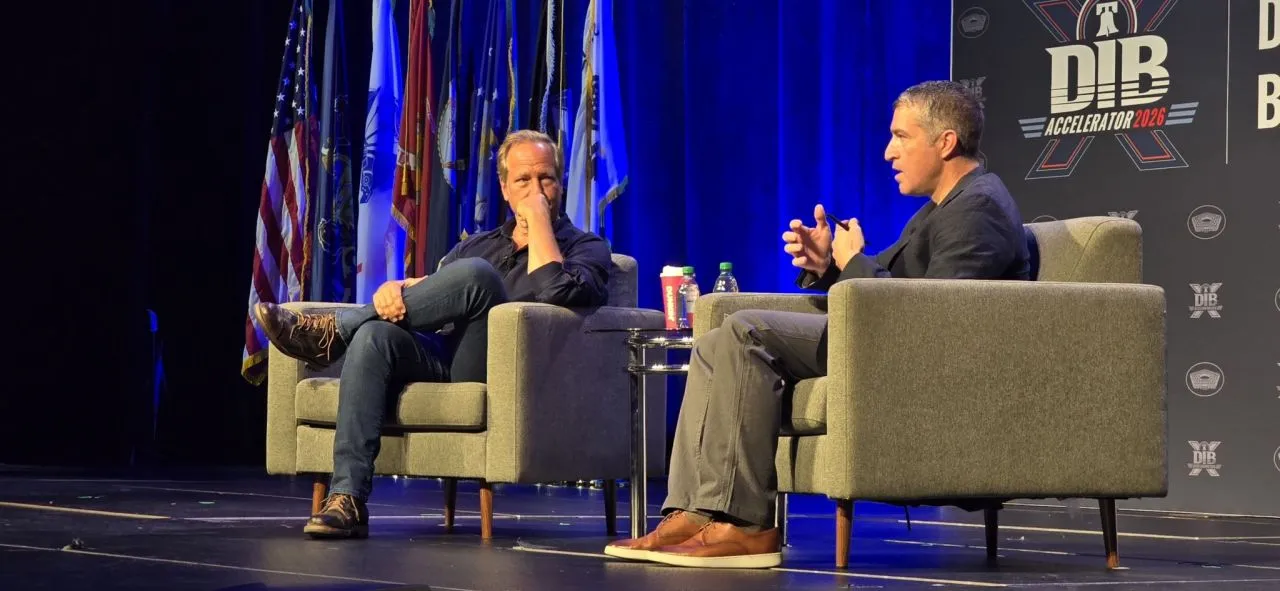
A few weeks ago, I was in Philly at the Defense Industrial Base Accelerator conference listening to Mike Rowe and Hon. Michael Cadenazzi speak. At one point, he talked about a poster that had hung in his guidance counselor’s office in 1970.
On one side was a young man in a graduation cap, diploma in hand. On the other was a tradesman coming home dirty from work. Underneath them were four words:
“Work Smart, Not Hard.”
Rowe’s amendment today is simple: work smart and hard.
I have thought about that poster quite a bit since, because hidden inside it is a pretty good summary of how America came to think about work over the last half century.
There was nothing malicious about the message. Quite the opposite. Most parents want their children to have easier lives than they did. A man who spent thirty years on his feet in a hot factory, working nights or putting his body through hell, could hardly be blamed for wanting his daughter in an air-conditioned office. America became wealthier. Technology improved. College opened doors that had historically been closed to millions of people. Entire generations gained access to careers and opportunities that their parents could scarcely imagine.
That was progress.
But somewhere along the way, a reasonable desire for upward mobility hardened into something else. We began to associate intelligence with one kind of work and not another. The student who was great at calculus was told to become an engineer, but almost never a machinist. The kid who could tear apart an engine and put it back together was often treated as less academically promising than the kid who could write an essay about one.
For decades, high schools increasingly deprioritized vocational education in favor of a college-for-all model. Workshop classes disappeared from many schools, and with them went one of the few opportunities a young person had to discover that they might actually love making things.
The mistake was not encouraging people to go to college. I went to college. It changed my life. There are millions of young Americans who should become engineers, doctors, teachers, scientists, researchers and lawyers.
The mistake was deciding there was only one respectable version of ambition. And over time, that version of ambition became much more expensive.
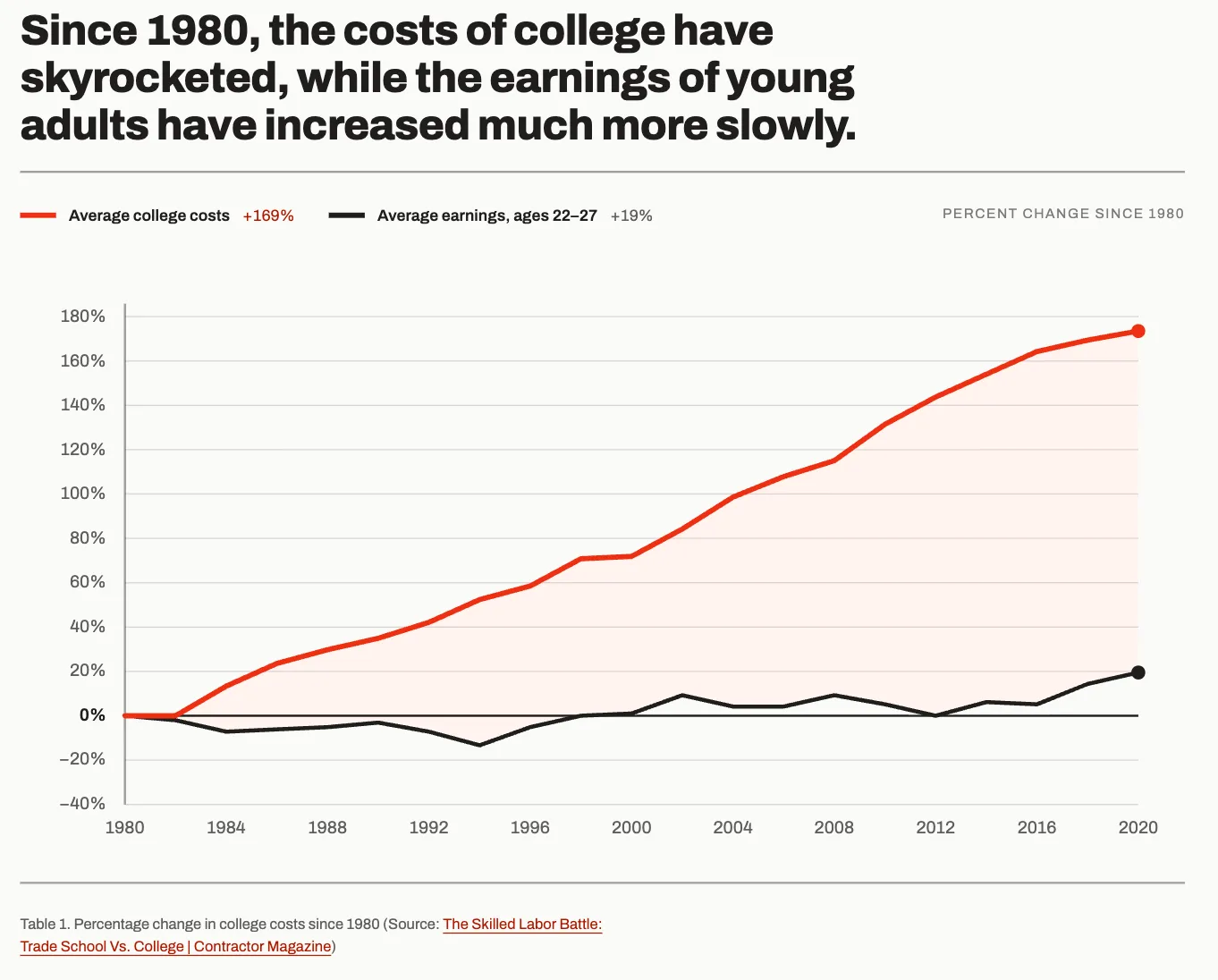
That chart is worth sitting with for a moment.
College remained extraordinarily valuable for many people, but the economic bargain underneath it changed. At precisely the same time that we were telling more young Americans that a four-year degree was the default route to a successful life, the cost of accessing that route was climbing dramatically.
Meanwhile, many of the alternatives had been culturally downgraded.
We created a strange hierarchy. Designing a machine was prestigious. Financing the company that owned the machine was prestigious. Writing software for the company that owned the machine was prestigious. Actually knowing how to run, maintain or repair the machine somehow became something different.
That cultural shift was happening alongside an enormous economic one.
American manufacturing employment reached an all-time peak of 19.6 million people in June 1979. From there, manufacturing employment fell through successive recessions and repeatedly failed to recover to its prior pre-recession levels.
Plants closed. Supply chains moved overseas. Entire towns changed. Fewer Americans worked in factories, fewer children grew up with parents who did, and fewer students encountered industrial work in school. The distance between large parts of American society and the physical work required to make the country function grew wider.
For a long time, that distance was relatively easy to ignore.
The shelves were still full. Products still arrived. The lights turned on. Airplanes took off. Cars rolled off assembly lines. The physical economy became something most of us interacted with constantly but rarely thought about.
Then the physical world began reminding us that it still existed.
COVID was one obvious moment. Suddenly shortages of relatively ordinary manufactured goods became national concerns and exposed how much manufacturing capability still mattered when we actually needed it. More recently, the renewed focus on defense production, semiconductors, energy and industrial capacity has forced versions of the same realization.
You can design extraordinary things, finance extraordinary things and write extraordinary software, but eventually somebody has to know how to make the thing.
Which makes Labor Day a particularly interesting holiday in America right now.
For most of us, the first Monday in September has become the unofficial end of summer. It is a three-day weekend, one last cookout, maybe a trip to the lake, college football returning and the first hint that fall is around the corner. There is nothing wrong with any of that.
But the day exists for a very different reason.
The first Labor Day parade took place in New York City on September 5, 1882. Before Labor Day became a federal holiday, labor activists and individual states had already begun recognizing it. The workers behind the movement were fighting for things that sound basic today precisely because previous generations fought to make them basic: reasonable hours, fair wages and safe working conditions. Congress eventually made the first Monday of September a legal holiday in 1894.
Peter J. McGuire, one of the early figures associated with Labor Day, described it as a day honoring those ……
“who from rude nature have delved and carved all the grandeur we behold.”
I like that line.
It is old-fashioned language, but it captures something we have become remarkably good at forgetting. Almost everything around us had to be built by someone.
The steel holding up the building. The transformer outside it. The airplane carrying you across the country. The engine inside it. The bridge you drove across on the way to the airport. The hospital equipment waiting if something goes wrong. The machines that produced the parts that went into all of those things.
There were people behind every one of them.
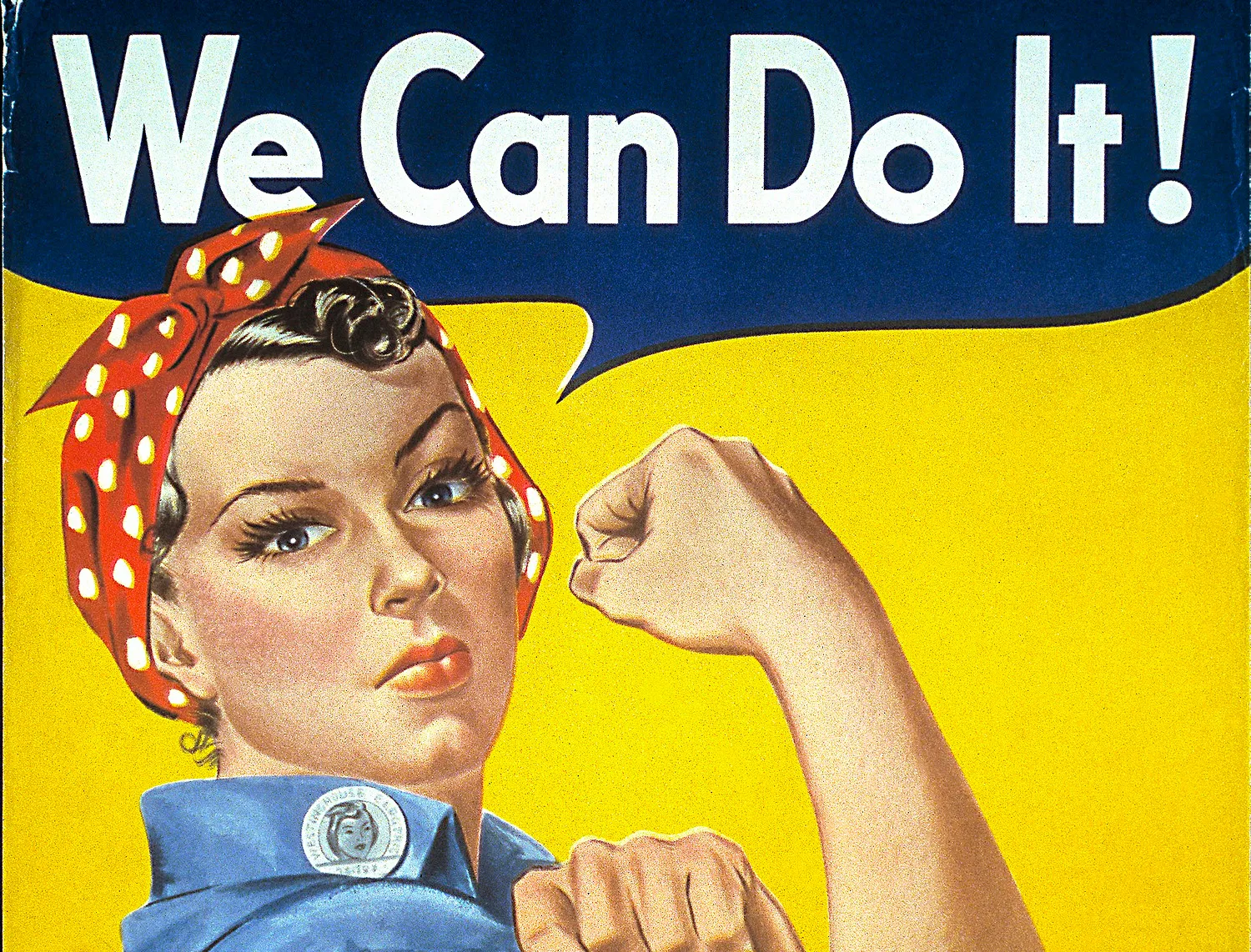
There is a reason images like this still resonate eighty years later.
For much of American history, the people who made things were not peripheral to the national story. They were the story. Steelworkers, machinists, welders, electricians, mechanics, operators, toolmakers and millions of others turned raw material into the physical foundations of American prosperity and power.
That work was also often brutal.
The history of industrial America includes dangerous factories, terrible working conditions, extraordinarily long hours and, at points, children working inside industrial facilities. Labor Day exists in part because workers fought against those conditions.
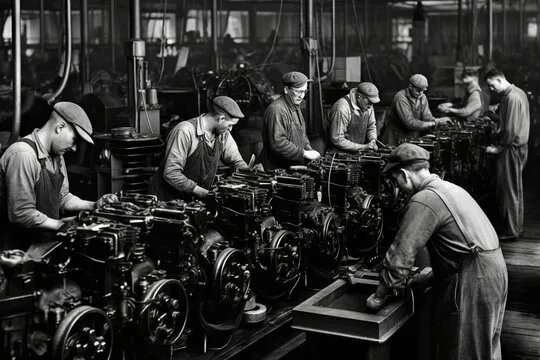
That history matters to the conversation we are having now, because America once again needs an extraordinary number of people who know how to build things.
American manufacturers are estimated to need roughly 3.8 million skilled workers by 2033, spanning sectors including semiconductors, defense, energy and beyond.
And the challenge is not simply finding enough bodies.
It is replacing knowledge.
A skilled machinist is not simply someone standing beside a CNC machine and pushing a button. A great maintenance technician learns to notice things in a machine that other people walk past. An experienced operator can recognize that a process is beginning to drift before the problem becomes obvious. A welder develops judgment through thousands of repetitions that a textbook can describe but cannot simply transfer.
Industrial knowledge has always moved from one generation to another through people.
That is what makes the aging of the skilled-trades workforce so consequential. Apprenticeships have historically depended on experienced workers being around long enough to teach the next generation. When that pool shrinks, the problem is not simply how quickly we can recruit young people into the trades. It is whether we can transfer enough accumulated knowledge before it leaves the workforce with the generation that carries it.
Even high wages do not instantly solve the problem. Ford CEO Jim Farley has struggled to fill thousands of mechanic openings despite some of those jobs offering six-figure compensation.
This is something we see constantly at Laborup.
Over the last year, I have spent a lot of my time inside factories and machine shops. We meet manufacturers with customers, orders, equipment and capital who still find themselves constrained by people. A machine does not create capacity if nobody can run it. A new production line does not matter if a company cannot staff it. And when a critical piece of equipment goes down, another software dashboard is considerably less useful than having someone around who knows what to do next.
I have been in small facilities where a handful of experienced machinists carry knowledge accumulated over decades, and in enormous plants where one maintenance technician can be the difference between a line producing and a line sitting still.
Once you see enough of these places, the phrase “labor shortage” starts to feel inadequate.
What we are losing is accumulated knowledge.
For the first time in a while, though, there are signs that the culture is starting to move in the other direction.
Young Americans are looking at the economics of a four-year degree more skeptically than their parents did. Artificial intelligence has also introduced new uncertainty into many of the white-collar careers that once seemed among the safest places to spend a working life.
A recent survey of 1,434 adults between the ages of 18 and 28 found that 42% of Gen Z workers said they were turning to blue-collar work, with avoiding student debt and avoiding replacement by artificial intelligence among the top motivations.
Apprenticeship numbers have been moving too. Roughly 214,000 people aged 16 to 24 were in apprenticeships in 2022, more than double the number a decade earlier, according to Department of Labor data cited in the original research.
I think something larger than economics is happening.
Building is becoming interesting again.
You can see it in defense, aerospace, semiconductors, energy and advanced manufacturing. You can see it in young founders who might have started software companies a decade ago now deciding that they want to build drones, rockets, nuclear reactors, robots, machine tools and factories. You can see it in the attention returning to the people who actually know how to make those things.
And increasingly, you can see it in institutions too.
Just a few days ago, Vice President J.D. Vance and Secretary Marco Rubio announced Foundry School, a new program aimed at developing entrepreneurs, engineers, technicians and industrial leaders to help rebuild American manufacturing. Eight universities are participating, including Arizona State, Georgia Tech, Ohio State, Penn State, the University of Kansas, Stanford, Vanderbilt and Washington University in St. Louis.
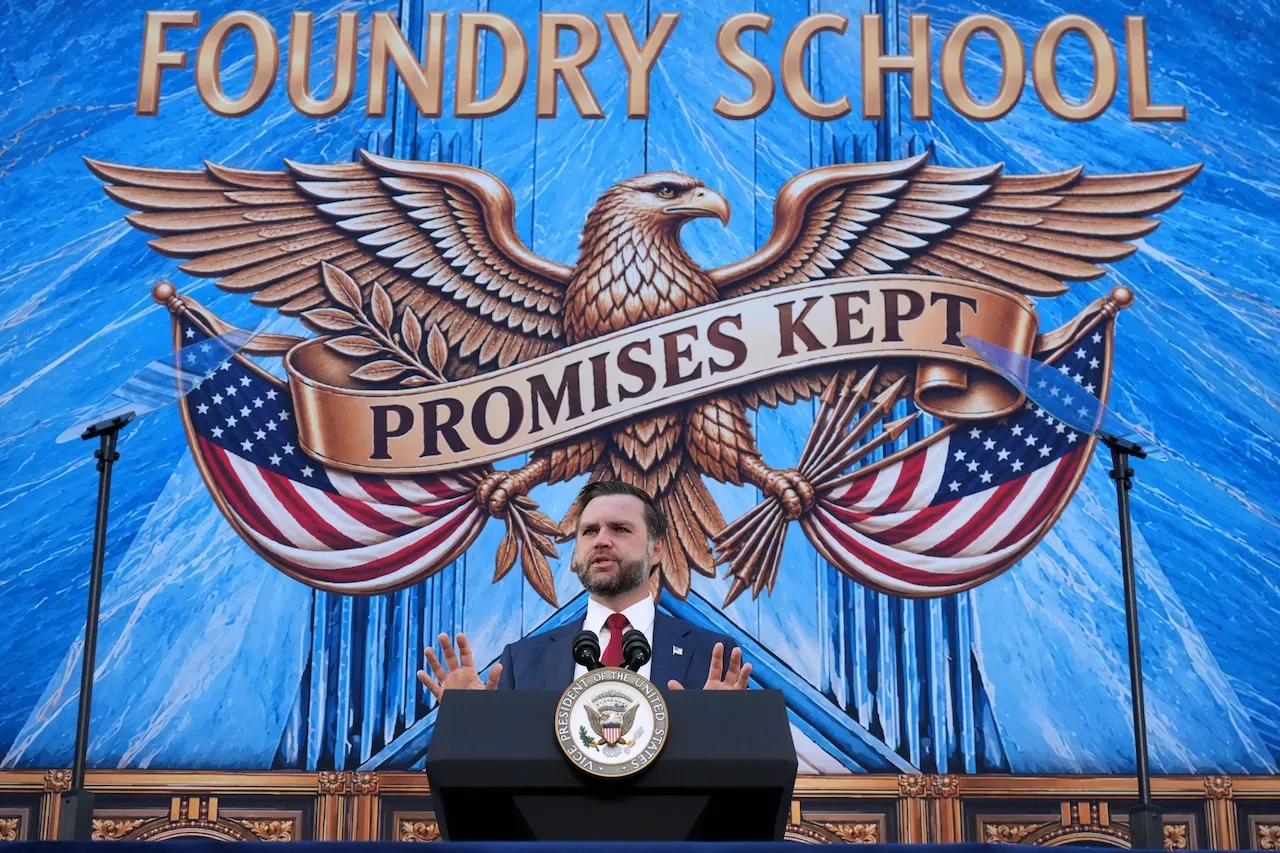
One program is not going to solve a workforce challenge measured in millions of people, nor will any administration, university or company.
But the signal is hard to miss.
Reindustrialization has moved from the margins of the economic conversation toward its center.
The question is what we do with that shift.
One answer I do not find particularly compelling is replacing decades of “everyone should go to college” with a new slogan that says everyone should become a welder.
That misses the point in exactly the same way.
The main sentiment should never be that everyone should go to college or that nobody should. Young people should have enough exposure to different kinds of work to understand what they are good at, what they enjoy and where their abilities can create a good life. College can be extraordinary. So can an apprenticeship. So can technical school. So can learning a trade alongside somebody who has spent twenty-five years mastering it.
What should change is the assumption that one of those choices reflects more ambition, intelligence or dignity than another.
And if America is going to ask millions of people to answer the call to rebuild its industrial base, there is another part of the bargain that we cannot ignore.
We have to make these careers worthy of them.
That may be the most important lesson contained in Labor Day itself. The people who fought for this holiday were not demanding that society merely create more industrial jobs. They were demanding that industrial work provide a better life. They wanted reasonable hours, fair wages, safer workplaces and dignity.
The modern version of that bargain should be even more ambitious.
A twenty-year-old entering a machine shop today should be able to see a career ahead, not simply a shift schedule. They should be able to develop valuable skills, understand what those skills are worth, find opportunities where those skills are needed, learn from people who have mastered the craft and participate economically in the industrial growth the country is asking them to create.
Manufacturers cannot spend the next decade talking about a skilled-labor crisis while treating workforce as an afterthought. If we want exceptional people to enter these careers, we have to build exceptional careers for them.
Technology has an enormous role to play in that. So does AI. So will robotics.
I don’t think the future of industrial work is some nostalgic return to the factory of 1955. Nor should it be. The factory of the future should be dramatically more automated, more productive and safer than the factories our grandparents worked in.
But more technology does not make human capability irrelevant. It changes what human capability is worth.
Someone still needs to install the machine, program it, maintain it, improve the process around it, inspect what comes off it and know what to do when the assumptions baked into software meet the messiness of the physical world.
The best industrial future I can imagine is not humans or machines. It is better machines making extraordinary people dramatically more capable.
Which brings me back to that poster in Mike Rowe’s guidance counselor’s office.
“Work Smart, Not Hard” reflected a very particular idea of progress. It drew a line between the person using his brain and the person using his hands and quietly suggested which side of the picture a successful young person ought to choose.
I don’t think the country we are trying to build can afford that distinction anymore.
We are going to need brilliant engineers and brilliant machinists, scientists and electricians, roboticists and maintenance technicians. People who invent new things and people who become so extraordinarily good at making those things that the distinction between intelligence and craftsmanship stops making much sense.
Rowe’s correction to that old poster is probably the better one: work smart and hard.
So while most of us rightfully enjoy the long weekend, Labor Day is worth using for what its name actually asks us to do: remember labor.
Remember the generations of people who woke up every morning and built the physical foundations of the country we inherited. Their work was not always glamorous, and far too often it was not adequately rewarded, but much of the America we know was built on top of it.
We stand on their shoulders today.
And if the industrial renaissance beginning around us is real, another generation is about to be asked to build an extraordinary amount on top of ours.
Our responsibility is not merely to tell them that their labor is needed. It is to make sure it is valued.
Sources
- U.S. Department of Labor, “History of Labor Day” https://www.dol.gov/general/laborday/history
- U.S. Bureau of Labor Statistics, “Forty Years of Falling Manufacturing Employment” https://www.bls.gov/opub/btn/volume-9/forty-years-of-falling-manufacturing-employment.htm
- The Washington Post, “Trade education can fix the labor market paradox” https://www.washingtonpost.com/opinions/2026/05/01/trade-education-can-fix-labor-market-paradox/
- Contractor Magazine, “The Skilled Labor Battle: Trade School Vs. College” https://www.contractormag.com/training/article/21257716/the-skilled-labor-battle-trade-school-vs-college
- NBC News, reporting on Gen Z and blue-collar work https://www.nbcnews.com/business/economy/gen-z-workers-tell-blue-collar-stories-tiktok-rcna232203
- U.S. State Department, Foundry School announcement, September 3, 2026 https://www.state.gov/releases/office-of-the-spokesperson/2026/09/trump-administration-launches-foundry-school-to-build-the-workforcebehind-americas-manufacturing-comeback/
- Mike Rowe, “Making of the Poster” https://mikerowe.com/2013/09/making-of-the-poster/