How America Lost Its Rare Earth Advantage, and What It Will Take to Win It Back
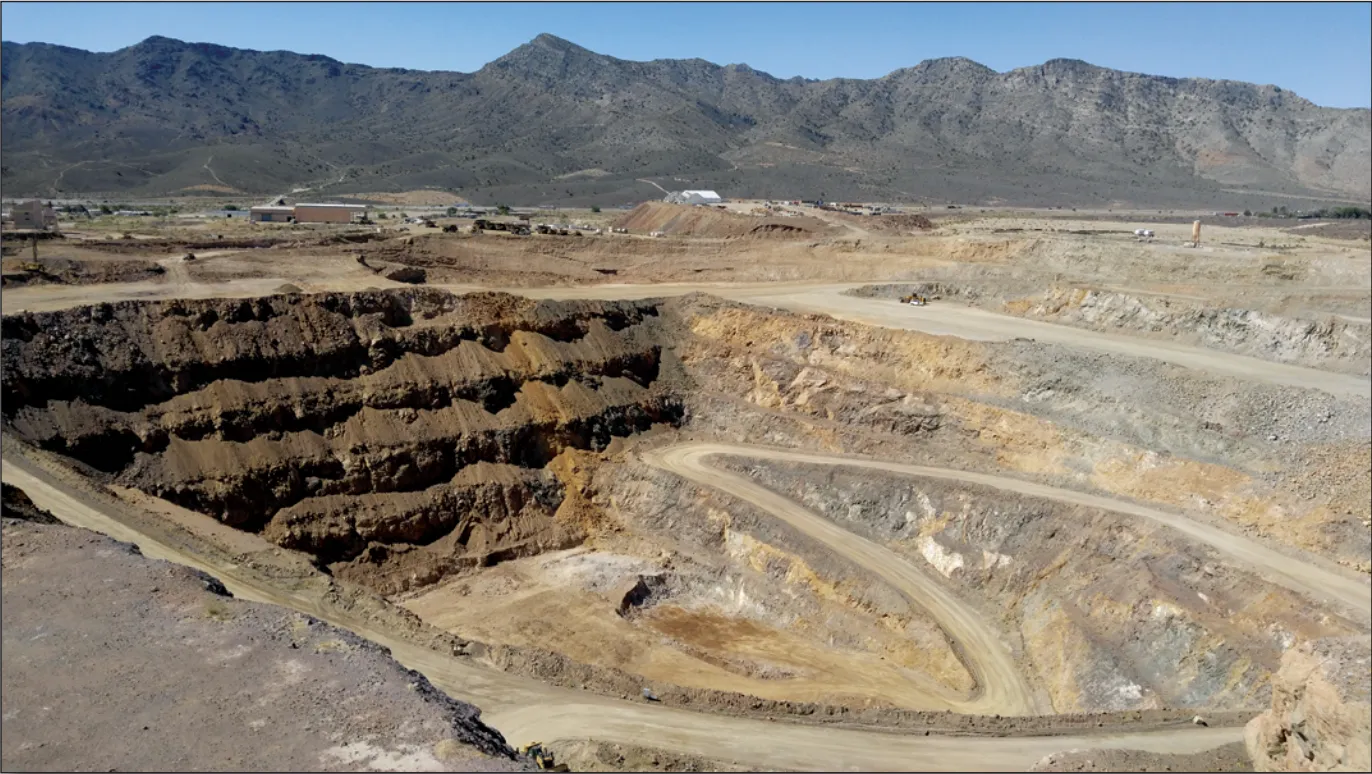
Mountain Pass Mine, June 2018. Photograph by Bradley Van Gosen
The best American discoveries have often been unexpected finds: vulcanized rubber, corn flakes, and even the microwave oven.
Following this honored American tradition of serendipity, the Mountain Pass mine in California’s Mojave Desert — the US’s only operational rare earth (REE) mine — had similar origins.
Accidentally discovered in 1949 by prospectors searching for uranium to fuel the emerging nuclear power industry, it became the world’s largest source of REEs.
Through the 1970s and early 1980s, the US was the world’s largest producer and refiner, with Mountain Pass the largest rare earth mine on the planet. The Cold War, one of America’s greatest inspirations, drove government-funded research into rare earth materials and helped create the solvent extraction process still commonly used for separation today.
As the Cold War ended, the US Department of Defense sold off* 99% of its national defense stockpile of rare earth materials as surplus, switching to just-in-time global sourcing.*1
In America’s place, China became the world’s largest producer of REEs by 1986, and still holds that title today, along with most of the world’s manufacturing industry in its deck of playing cards.
The Magnet on Your Fridge vs. The Magnet in Your Pocket
At this point, you might be thinking: what’s the big deal over some magnets?
Permanent magnets are unlike the American-made magnet that holds your grocery list on the fridge. Through a three-step process of mining, processing, and manufacturing, REEs become permanent magnets and a host of other modern-day necessities, as shown in the table below. Permanent magnets are prized for their power and resilience, making them essential to phones, electric cars, and military defense systems alike.
In 1787, Swedish army lieutenant Carl Axel Arrhenius discovered gadolinite (originally called ytterbite), the first identified rare earth mineral. Most of the seventeen elements in the category were identified over the following century and a half* — the last, promethium, wasn’t produced until 1945*. Rare earths are divided into two subgroups based on atomic weight: light rare earth elements (LREEs) and heavy rare earths (HREEs). China is the undisputed leader in heavy rare earths, controlling about 99% of the world’s HREE separation and refining capacity.2 LREEs are commonly used in electronics such as hard drives and speakers, where magnets are needed, but extreme heat isn’t a concern. HREEs, by contrast, are built to withstand intense heat and are used in electric vehicles, wind turbines, and aerospace actuators.
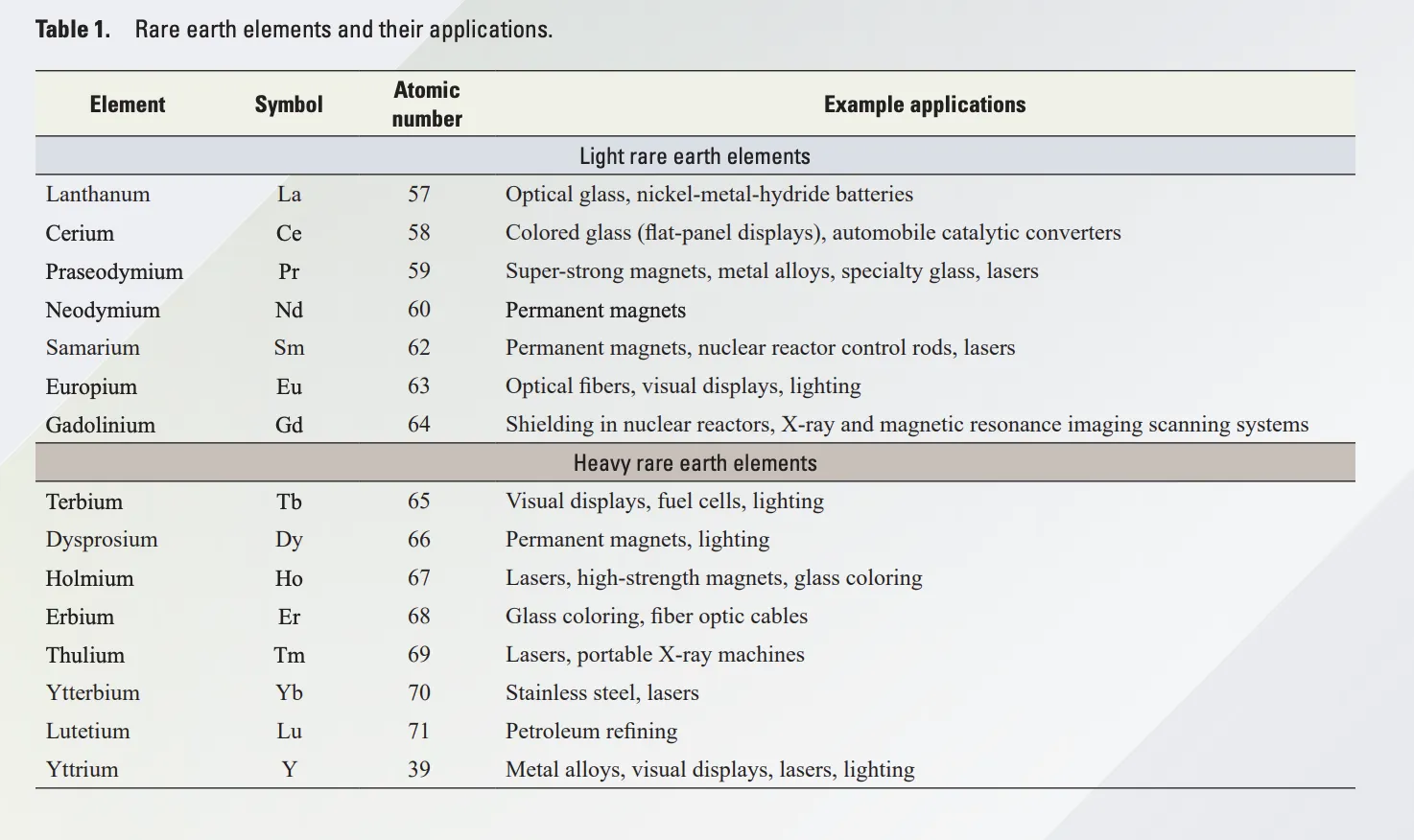
Table 1. Rare earth elements and their applications. Credit: pubs.usgs.gov/circ/1454/circ1454.pdf
How America Lost Its Pull
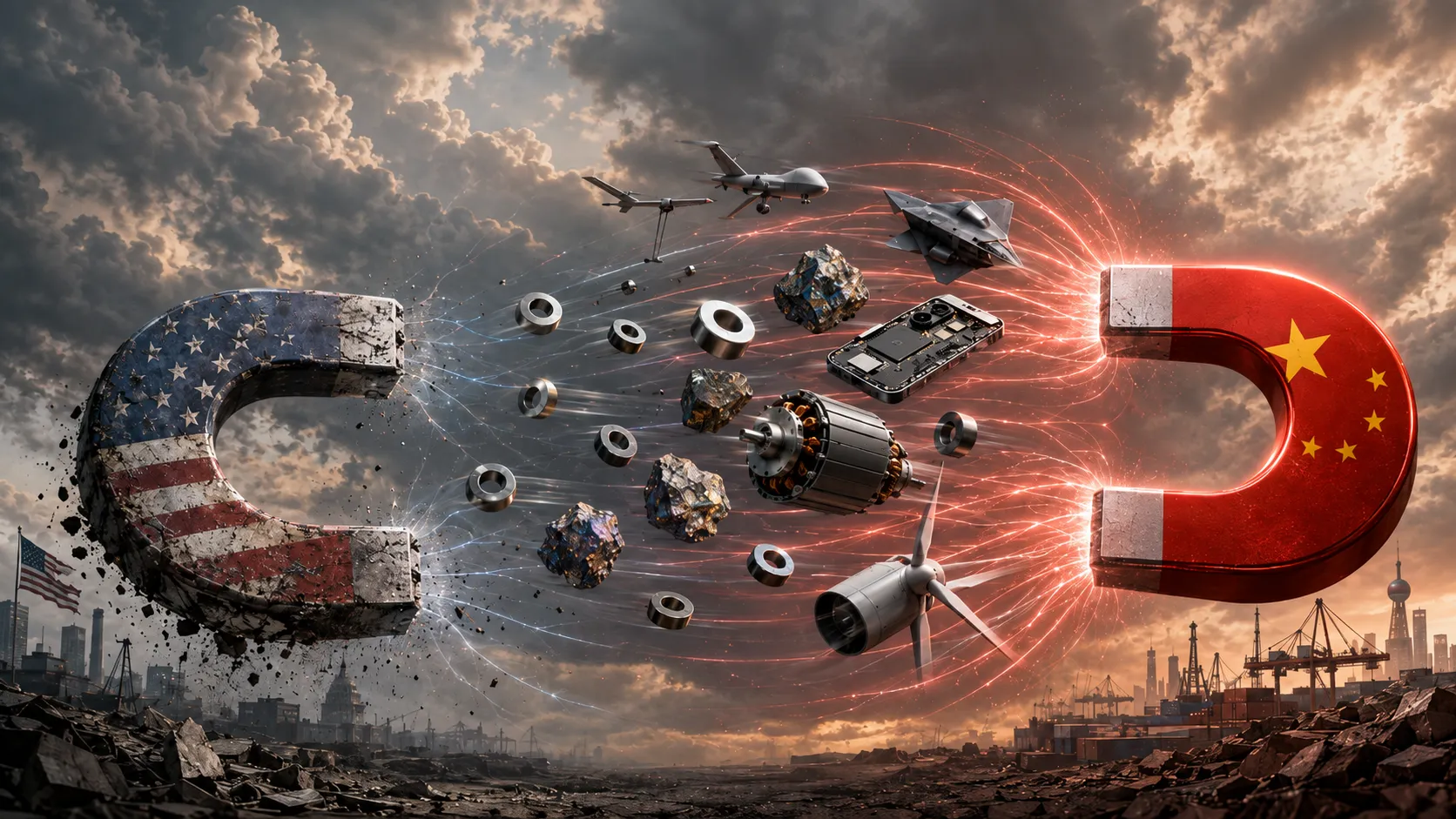
Source: ChatGPT
So how exactly did the US go from being a mining superpower to relying on China for the materials that power its own economy? Perhaps Deng Xiaoping spoke China’s monopoly into being when he famously said in 1992, “The Middle East has oil, China has rare earths.” His words still ring true today. China’s Bayan Obo mine is now the world’s largest REE deposit, and as of February 2026, China holds the world’s largest rare earth reserves at 44 million metric tons — about half of the estimated global total.3
When the US decided to sell off the surplus REEs it had spent years stockpiling, the reasoning rested on the cost calculus of the time: moving manufacturing offshore looked like the economically smart move, and American manufacturing employment fell by roughly a third between 1978 and 2020 as a result.4
Beyond mining, processing has also long been viewed as cheaper and cleaner to outsource abroad. While REEs can be found in most countries, turning mined material into usable metals and magnets has become a capital-intensive industry in its own right. The video below explains further China’s power and the US’s attempts to regain its edge.
The Dirt on The Mines
Like most good things, REEs come with real trade-offs. First, although rare earth elements are found worldwide, the concentrations in which they occur often make extraction economically inefficient. Second, processing is complex and damaging to both the environment and human health. Does that mean driving a Tesla or using a smartphone requires sacrificing the natural environment and public health? Not necessarily.
Researchers are developing more efficient, selective separation technologies that reduce the need for toxic chemicals, while some companies are piloting closed-loop recycling to recover rare earths from used electronics. There’s also renewed interest in cleaner extraction methods like bioleaching, which uses microbes instead of harsh reagents. These innovations offer hope that future REE production can be more sustainable for people and the planet alike.
The environmental toll has been serious enough that Sweden nearly ignored rare-earth-rich land to protect its water supply. The Norra Kärr deposit sits on a beautiful stretch of shoreline in southern Sweden, but if mining were to commence, it would risk polluting the lake that serves as a drinking water source for a quarter million people.5 Sweden’s past reluctance to act resulted from long legal battles over the decision. Just last month, though, the Swedish government granted operator Leading Edge Materials a full 25-year exploitation concession, deciding that supplying the EU with critical raw materials is a public interest that outweighs competing land-use objections.
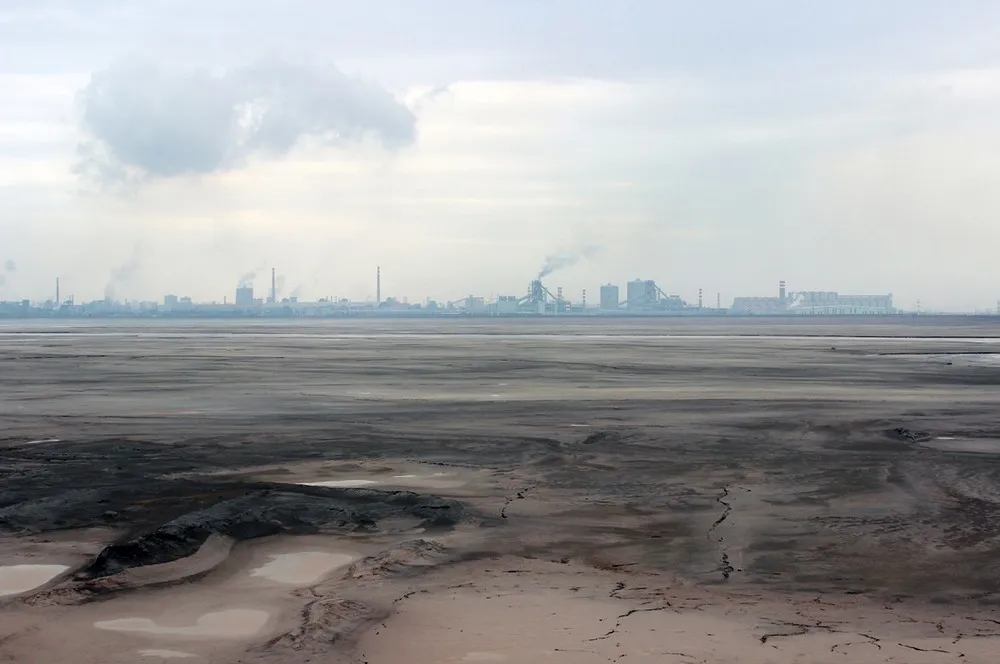
A view of China’s Bayan Obo mine. Credit: Skyline of Baotou, photo by Liam Young / Unknown Fields
China’s Polarizing Influence
In the world of rare earth materials, Japan is the idolized success story. In 2010, a territorial dispute led China to halt REE exports to Japan for roughly two months, and Japan learned the hard way that relying on a neighbor for a cup of sugar doesn’t guarantee you get to keep baking your cake. When Japan faced the embargo, the focus shifted to becoming self-reliant on its own resources. Sixteen years later, the numbers have moved: Japan has cut its dependence on Chinese rare earths from over 90% in 2010 to under 60% today, with a goal of dropping below 50% by the end of this year.6 The process has been long and expensive, but Japan has become a model for other countries to follow.
The path has been laid out, and the US has begun its own journey toward independence. Just last month, USA Rare Earth announced a roughly $1.2 billion investment in a new magnet and refined-metals facility in Cherokee County, South Carolina.7 Targeted to be fully operational by 2028, the facility is expected to produce up to 6,400 metric tons of NdFeB rare earth magnets and 5,000 metric tons of strip-cast metal and alloy annually, enough to supply critical sectors such as electric vehicles, wind turbines, and defense manufacturing. By bringing production onshore, the facility aims to reduce US reliance on imported magnets, support hundreds of skilled jobs, and provide a more stable domestic supply chain for key industries. Even with this momentum, competing against China’s state subsidies will be an uphill battle.
The New Magnet Makers
Government money is only half the story. A wave of startups is racing to rebuild the parts of the supply chain America let go dormant. Vulcan Elements, a Durham, North Carolina startup founded in 2023, is building a $1 billion factory in Benson, North Carolina, expecting to hire around 1,000 workers.⁸ The company secured a $620 million loan from the Department of War along with a federal equity stake, and was separately raising $550 million in private capital at a $2 billion valuation, a striking jump for a company that had closed a $65 million Series A only months earlier.⁹ Vulcan has also partnered with Indiana’s ReElement Technologies, which supplies refined rare earth elements and recycles manufacturing scrap back into the supply chain.
Not every startup is betting on mining more rare earths; some want to need fewer of them. Niron Magnetics, a University of Minnesota spinout, makes permanent magnets from iron and nitrogen instead of rare earths, and opened a pilot plant in Minneapolis in 2024.¹⁰ Noveon Magnetics builds a closed-loop recycling process that recovers rare earths from end-of-life magnets, cutting energy use by roughly 90% compared to conventional mining and refining.¹¹
Meanwhile, the broader critical-minerals boom is pulling in AI money too. Mariana Minerals raised $310 million at a $1.5 billion valuation to run US mines, including copper and lithium operations, using its own AI software.¹² It is a sign of a wider bet: rare earths and the other critical metals feeding modern manufacturing are the next chokepoint the US cannot afford to keep ignoring, and increasingly, the people trying to fix it are not government labs but small, well-funded companies willing to bet years and hundreds of millions of dollars on solving it.
Closing Thoughts
Today, the American manufacturing industry can no longer stumble into rare earth dominance the way it once did. China has claimed the title that the US handed over decades ago. When chance fails, it is our second sacred tradition of determination that has to carry the work forward.
There are real drawbacks along the way, but through continued investment in domestic partnerships, innovation, and the American workforce, the US can rebuild the supply chains it once controlled and secure a more resilient future for its industry.
Because…..we need these MAGNETS.
Sources
-
https://research.contrary.com/report/restoring-american-rare-earth-independence
-
https://science.nasa.gov/earth/earth-observatory/mountain-pass-rare-earth-mine-151085/
-
https://fpif.org/rare-earth-mining-sacrificing-the-environment-to-save-the-planet/
-
https://research.umn.edu/news/nirons-clean-earth-magnet-tech-scales-creates-jobs
-
https://thenextweb.com/news/mariana-minerals-310m-series-b-autonomous-critical-minerals